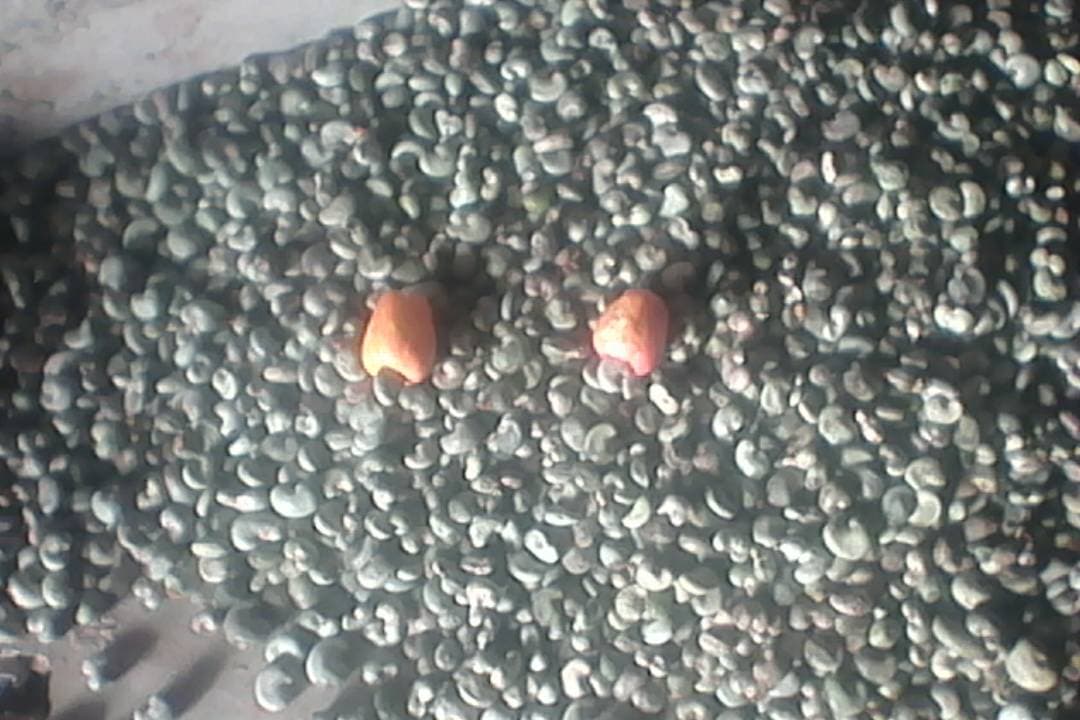
Raw cashew nuts (RCN) are bought and sold on a few key numbers. Together they tell a processor how many kernels a lot will yield, what size those kernels will be, and how well the nuts will store.
Outturn (KOR), measured in LBS
Outturn, also called Kernel Outturn Ratio (KOR), is the weight in pounds of usable kernels recovered from one 80 kg bag of raw nuts. A lot quoted at "50 LBS" should yield about 50 lb of good kernels per bag.
Outturn is the single biggest driver of price: each extra pound per bag means more saleable kernel from the same purchase.
Nut count
Nut count is the number of raw nuts in one kilogram. A lower count means bigger nuts, which usually produce larger, higher-value kernel grades. A lot described as "below 200" has fewer than 200 nuts per kg.
Moisture
Raw cashew must be dry enough to store without mould or quality loss. Buyers commonly specify a maximum moisture level — for example 7% or 8% — checked on arrival. Wetter nuts weigh more but store poorly.
The cutting test
Outturn and defects are measured with a cutting test: a sample of nuts is cut open and the kernels are sorted and weighed. The test also records defective, immature, and spotted kernels. Agree who performs the test and the sampling method in your contract.
- Outturn (LBS per 80 kg bag)
- Nut count per kg
- Moisture percentage
- Defective and spotted kernel percentage
Our current RCN specifications
We supply raw cashew nuts in shell from The Gambia (50+ LBS, nut count below 200) and Senegal (52+ LBS, nut count below 225), both at 7% maximum moisture and packed in jute bags. Contact us for current availability and shipment schedules.